Continuous Compliance vs Annual Audits: The Shift Happening Now
Annual SOC 2 audits are becoming a lagging indicator. Buyers and auditors are both shifting toward continuous compliance — here's what that means in practice.
The annual audit model has worked for decades. In the last two years, it's started breaking. The shift toward continuous compliance isn't a marketing fad — it's a response to how modern software actually gets built and sold.
Why annual audits became lagging indicators
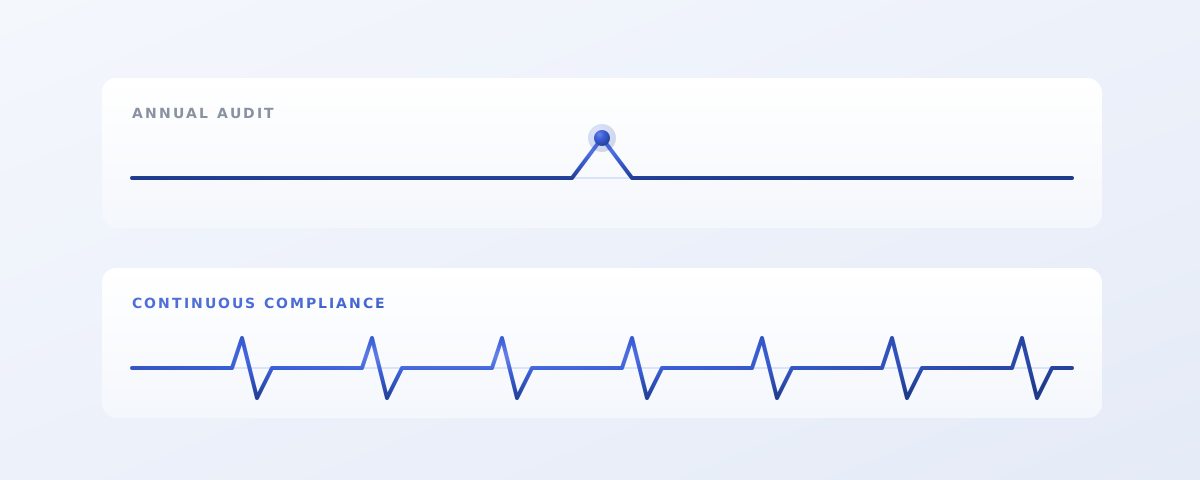
In a SaaS company that ships weekly (or hourly), the state of your compliance program changes constantly. New services get deployed, integrations change, access patterns evolve. An annual snapshot captures a moment in time that was already stale by the time the report was printed.
Buyers started noticing. "I have your SOC 2 report from last quarter — but your Engineering team just doubled. Has your control posture kept up?" is now a normal procurement question.
What continuous compliance actually means
The core shift: evidence of control effectiveness is collected continuously, not periodically. Dashboards show current posture, not last-quarter posture. Changes to controls trigger alerts, not discovery during audit prep.
In practice, this shows up as:
- Real-time control monitoring (a misconfigured S3 bucket creates an alert within minutes, not at next audit)
- Live readiness scoring (you know today if you'd pass an audit, not nine months from now)
- Evidence that's always fresh (auditors see current state, not historical artifacts)
- Drift detection (when policies and practice diverge, you find out immediately)
What this means for audits themselves
The annual audit isn't going away — AICPA Trust Services Criteria still require attestation events. But the work is different. Instead of panicked 6-week audit prep, audits become: "here's the continuous evidence we've been generating all year; please confirm." Audits get faster, cheaper, and less disruptive.
What's changing for 2026
Two new pressures are accelerating the shift:
- AI governance controls are entering SOC 2 and ISO 27001. These aren't static — your AI models change frequently, and controls need to keep up.
- EU AI Act obligations begin in 2026, with continuous risk assessment requirements for high-risk AI systems.
Annual audits simply can't keep up with AI systems that update weekly. Continuous compliance is the only way the math works.
What it means for you
If you're starting a compliance program now, don't architect for an annual audit model that's being phased out. Build continuous evidence collection from day one — even if your first audit is old-school. Your year-two and year-three programs will be dramatically less painful.
Stop managing compliance in spreadsheets.
Simpra is the AI-native platform that turns policies, controls, evidence, and risk into one live system of record.